
Yes, some white spots on teeth can be remineralized, but it depends on what caused them. White spots caused by early enamel demineralization may improve when mineral loss is controlled, while changes caused by fluorosis, enamel defects, or other developmental conditions are different and may not respond to remineralization.
Enamel & Co. uses nano-hydroxyapatite, a mineral similar to the mineral naturally found in teeth, to support healthy enamel. However, a white spot should not automatically be assumed to be a sign of mineral loss. Identifying the cause first helps determine whether remineralization is a reasonable approach and whether professional treatment may be needed.
What Do White Spots on Teeth Actually Mean?
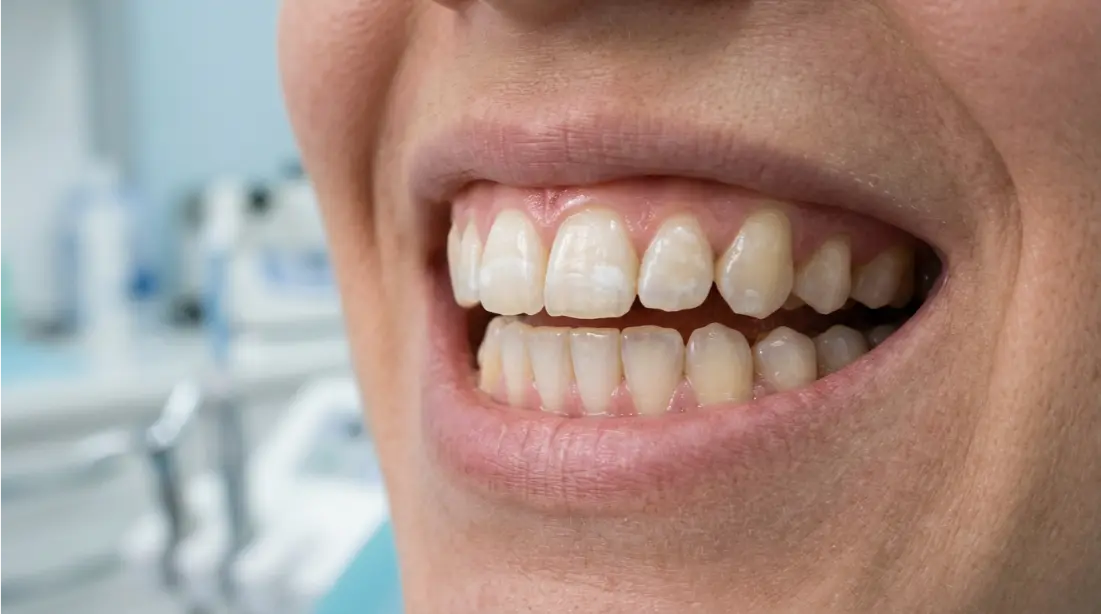
White spots on teeth are areas that look chalky, cloudy, or less shiny than the surrounding enamel. They can develop when the mineral structure of enamel changes, creating tiny spaces that affect how light passes through and reflects off the tooth surface. These areas are often called white spot lesions, especially when they are linked to early enamel demineralization.
Are White Spots Always a Sign of Tooth Decay?
No. Some white spots develop when acids remove minerals from enamel during the early stages of tooth decay. At this stage, the damage may be managed with appropriate oral care and remineralization before a cavity forms. However, white spots can also result from fluorosis or changes in how enamel developed during childhood. These conditions have different causes and may not respond to remineralization in the same way, so identifying the cause is important before choosing a treatment.
What Causes White Spots on Teeth?
White spots can develop for several reasons, and the cause affects how they should be treated. Some appear because enamel loses minerals over time, while others form when teeth are still developing. Understanding the difference helps determine whether remineralization may help or whether another treatment is needed.
Early Enamel Demineralization
Enamel demineralization happens when acids remove minerals from the tooth surface. Plaque bacteria produce these acids when they break down sugars from food and drinks. As minerals are lost, the enamel may develop chalky white areas that can signal early tooth decay.
At this stage, the enamel surface may still be intact, meaning a cavity has not yet formed. Controlling plaque and reducing frequent sugar exposure, along with appropriate remineralizing care, may help stop the process and support mineral recovery.
White Spots After Braces or Aligners
White spots can appear around brackets after braces are removed because plaque can collect in areas that are difficult to clean. When bacteria in plaque produce acids, minerals can leave the enamel and create pale, chalky marks. Similar changes may occur with aligners if oral hygiene is inconsistent.
These spots are often early demineralization lesions rather than simple surface stains. They may improve with appropriate care, but the outcome depends on how much the enamel has been affected and whether the surface remains intact.
Dental Fluorosis
Dental fluorosis develops when teeth are forming beneath the gums and a child receives more fluoride than needed over time. It can cause faint white lines, cloudy patches, or, in more noticeable cases, brown discoloration and surface changes.
Unlike early demineralization that develops after teeth erupt, fluorosis is a change in how enamel forms. Remineralizing toothpaste cannot simply reverse these developmental changes or remove the white marks. Depending on their appearance and severity, cosmetic treatments may be considered by a dentist.
Enamel Hypoplasia and Other Developmental Changes
Enamel hypoplasia occurs when teeth do not develop enough enamel during formation. The affected areas may look white, yellow, or brown and can have thinner enamel, pits, or grooves. Other developmental disturbances can also change the enamel’s appearance.
These conditions differ from mineral loss caused by plaque acids after teeth erupt. Because the enamel did not form normally, toothpaste cannot rebuild missing enamel. Treatment depends on the type and severity of the defect and may involve monitoring, protective dental care, or cosmetic treatment.
Which White Spots Can Be Remineralized?
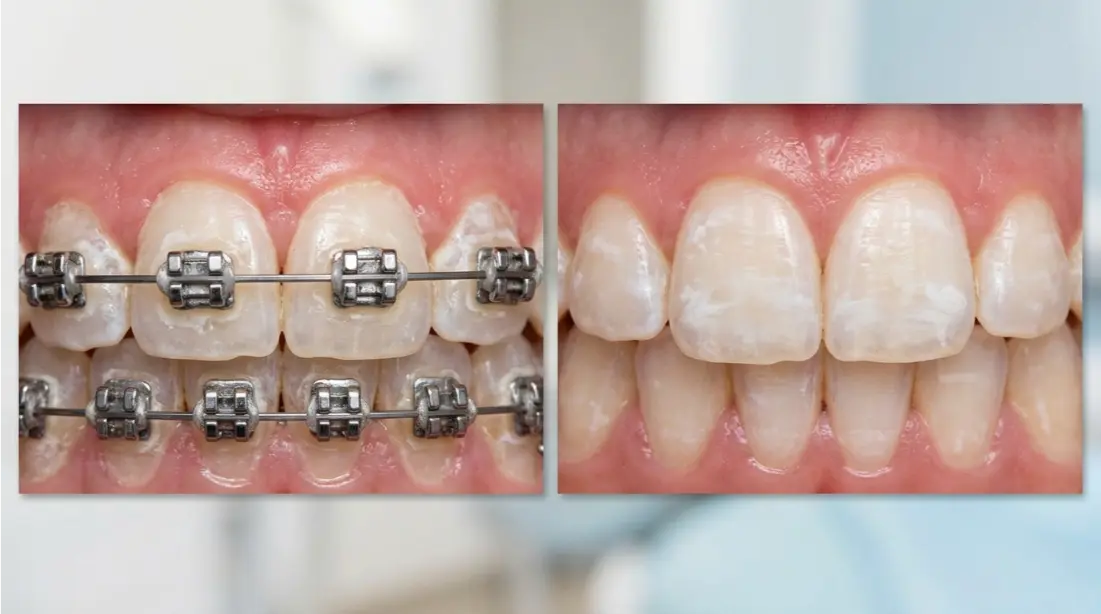
Whether white spots can be remineralized depends on what caused them and how much the enamel has changed. Early spots caused by mineral loss may respond to appropriate care, while spots caused by changes during tooth development generally cannot be reversed with toothpaste alone.
Early White Spots From Mineral Loss
White spots caused by early enamel demineralization may be remineralized when the tooth surface is still intact. Saliva helps neutralize acids and supplies minerals, including calcium and phosphate, that support enamel. Fluoride and other suitable remineralizing ingredients may also help manage early mineral loss.
Results depend on controlling the cause. Brushing regularly, cleaning between teeth, and reducing frequent exposure to sugary foods and acidic drinks can help limit further mineral loss. Although early lesions may improve, visible white marks do not always disappear completely.
White Spots Caused by Enamel Development
White spots caused by dental fluorosis or enamel hypoplasia form differently. Fluorosis affects how enamel develops during childhood, while hypoplasia occurs when insufficient enamel forms. These are not simply areas of enamel that have lost minerals after the teeth erupted.
Remineralizing toothpaste may support general enamel care, but it cannot reverse these developmental changes or replace enamel that never formed properly. A dentist can identify the likely cause and recommend suitable options if the spots affect appearance or leave the teeth more vulnerable to damage.
How Does Remineralization Help White Spot Lesions?
Remineralization is the process through which minerals, such as calcium and phosphate, return to areas of enamel that have lost minerals. It can help strengthen weakened enamel and may stop early white spot lesions from progressing when the tooth surface is still intact.
However, remineralization works best when the cause of mineral loss is also addressed. Regular brushing, plaque control, and reducing frequent exposure to sugary and acidic foods help limit further damage. Remineralization does not create a completely new layer of enamel or guarantee that every white spot will disappear.
Can Toothpaste Help Remineralize White Spots?
Yes, certain toothpastes can support remineralization, but their effects depend on the ingredients and the type of white spot. Fluoride helps enamel resist acid attacks, while calcium- and phosphate-based ingredients can support the supply of minerals. Hydroxyapatite, a mineral similar to the main mineral found in teeth, has also been studied for its potential to support enamel repair.
Research on these ingredients is promising, but results vary, and no toothpaste can reliably remove every visible white spot. Spots caused by fluorosis or developmental enamel defects generally require a different approach from early mineral loss. A dentist can help identify the cause and determine which treatment is suitable.
Can Hydroxyapatite Help With White Spots on Teeth?
Hydroxyapatite may help support white spots caused by early enamel demineralization. It is a calcium phosphate mineral similar to the main mineral found in tooth enamel. In toothpaste, it may help support the enamel surface and promote mineral recovery in areas affected by early mineral loss.
However, hydroxyapatite does not work the same way for every white spot. It may support demineralized enamel, but it cannot reverse developmental conditions such as fluorosis or replace enamel that did not form properly. Supporting enamel health is also different from removing the visible white mark, which may remain even after the lesion becomes stable.
What Does Research Say About Nano-Hydroxyapatite?
A 2024 systematic review and meta-analysis examined 14 studies on nano-hydroxyapatite and white spot lesions, with 12 included in the meta-analysis. The researchers found that pure nano-hydroxyapatite showed promising effects on enamel surface microhardness and mineral gain compared with fluoride alone. However, only three of the included studies were conducted in vivo, while most were laboratory studies. Read the 2024 systematic review and meta-analysis on PubMed
The same review found no significant improvement in the visible color of white spot lesions after nano-hydroxyapatite treatment. The researchers also highlighted the limited number of clinical studies, study-quality concerns, and relatively short follow-up periods. This means nano-hydroxyapatite is promising for supporting mineral recovery, but current evidence does not show that it will reliably make every visible white spot disappear. Read the full research paper
Can White Spots on Teeth Go Away on Their Own?
White spots on teeth may improve over time, but it depends on the cause. Spots caused by early enamel demineralization may stabilize or become less noticeable with good oral hygiene and appropriate remineralizing care. However, the visible mark may not disappear completely, even when the enamel becomes more stable.
White spots caused by developmental conditions, such as dental fluorosis or enamel hypoplasia, generally do not go away on their own. These spots form as the enamel develops, rather than from mineral loss that can be repaired. A dentist can help identify the cause and recommend the right approach.
What Can You Do to Prevent White Spots From Getting Worse?
Good oral hygiene can help prevent early white spots from progressing and reduce the risk of new spots forming. Brush twice daily with a soft-bristled toothbrush, clean between your teeth every day, and use toothpaste suited to your cavity-prevention needs. Limit frequent exposure to sugary and acidic foods and drinks, since they can contribute to enamel mineral loss. Regular dental visits also help identify early changes before they progress.
How Do You Prevent White Spots During Braces?
Braces and aligners can make plaque harder to remove, especially around brackets and attachments. Brush carefully around these areas, clean between your teeth, and follow your orthodontist’s cleaning instructions. Removing plaque regularly helps reduce the risk of mineral loss that can leave white marks around brackets after braces are removed.
When Should You Have White Spots Checked by a Dentist?
Have a dentist check white spots if they are new, appear near the gumline, develop around braces or aligners, or become more noticeable over time. You should also seek an assessment if the spots feel rough, cause sensitivity, spread, or begin to turn darker. These changes may indicate enamel mineral loss or another issue that needs attention.
The appearance of a white spot alone cannot always reveal its cause. Early demineralization, dental fluorosis, and enamel development problems can look similar but may need different approaches. A dentist can examine the affected area, identify the likely cause, and recommend suitable care.
What Treatments Can a Dentist Use for White Spots?
The right treatment for white spots depends on their cause, depth, and appearance. Some spots may need only preventive care, while others may benefit from a dental procedure to make them less visible. A dentist can assess the enamel and recommend an approach that suits the type of white spot.
Remineralization and Preventive Care
For early white spots caused by mineral loss, a dentist may recommend fluoride treatment, suitable remineralizing products, and better plaque control. Regular brushing, cleaning between teeth, and reducing frequent sugar exposure can help protect the enamel. The dentist may also monitor the spots over time to check whether they are stable or changing.
Resin Infiltration
Resin infiltration is a minimally invasive treatment that can help reduce the appearance of certain white spot lesions. A dentist applies a low-viscosity resin to the affected enamel to fill tiny pores that scatter light, making the spot less noticeable. It may be suitable for selected lesions, including some white spots that appear after braces, but it is not necessary or appropriate for every case.
Microabrasion or Other Cosmetic Options
Microabrasion removes a very thin layer of the outer enamel to improve the appearance of certain superficial white spots. Depending on the cause and depth of the defect, a dentist may discuss other cosmetic options as well. These treatments are not suitable for every type of white spot, so the dentist should assess the enamel before recommending a procedure.
Can White Spots Be Remineralized?
Yes, some white spots on teeth can be remineralized, especially those caused by early enamel mineral loss. Appropriate oral hygiene and remineralizing care can help restore minerals to weakened enamel and prevent early lesions from progressing. However, the result depends on the cause and condition of the enamel.
White spots caused by dental fluorosis or developmental enamel defects are different because they relate to how the enamel formed. Hydroxyapatite toothpaste may help support remineralization in areas affected by mineral loss, but it cannot guarantee that every white spot will disappear. If a white spot is new, persistent, spreading, or changing in texture, have a dentist examine it to identify the cause and recommend suitable care.
Support Your Enamel Health With Enamel & Co.
White spots can have different causes, and the right care depends on your enamel’s condition. Enamel & Co. toothpaste is formulated with nano-hydroxyapatite to help support enamel remineralization. Ask your dentist whether it fits your oral care routine, then shop Enamel & Co. toothpaste to support your daily enamel care.
Conclusion
White spots on teeth can develop for several reasons, including early enamel mineral loss, braces, dental fluorosis, and enamel development defects. Some spots caused by early demineralization may respond to remineralizing care, while others may need professional treatment to improve their appearance. The key is identifying the cause rather than assuming every white spot can be reversed with toothpaste.
Good oral hygiene, regular dental visits, and appropriate enamel care can help protect your teeth and prevent early mineral loss from getting worse. Nano-hydroxyapatite toothpaste may help support enamel remineralization, but it does not guarantee that visible white spots will disappear. If you notice new or changing spots, consult your dentist to find the right approach for your teeth.
Frequently Asked Questions
Can White Spots on Teeth Turn Brown?
Yes, some white spots may turn brown or darker over time, especially if the affected enamel continues to change or stain. A change in color should be checked by a dentist to determine whether it is related to staining, mineral loss, or tooth decay.
Are White Spots on Teeth Permanent?
Some white spots may remain for years, particularly those caused by fluorosis or enamel development defects. Spots caused by early mineral loss may become less noticeable with appropriate care, but complete removal is not guaranteed.
Can Teeth Whitening Make White Spots More Noticeable?
Yes, teeth whitening can sometimes make white spots stand out more because the surrounding enamel may respond differently to the whitening treatment. Ask your dentist to assess the spots before starting whitening.
Can White Spots on Teeth Mean You Have Too Much Fluoride?
Not always. Dental fluorosis can develop when teeth are exposed to excessive fluoride while they are forming, but white spots can also result from early enamel mineral loss or developmental defects. A dentist can help identify the likely cause.
Should You Use Whitening Toothpaste on White Spots?
Whitening toothpaste may help remove some surface stains, but it does not correct every cause of white spots. If the marks are related to enamel mineral loss or a developmental defect, ask your dentist which treatment is suitable before trying to whiten them.