
Can weak tooth enamel become stronger? Yes, enamel that has started to lose minerals may become stronger through a natural process called remineralization. During this process, minerals return to weakened areas of the enamel and help make the surface more resistant to future damage.
However, strengthening enamel is different from growing new enamel. Once enamel has been physically worn away, chipped, or permanently lost, your body cannot naturally grow it back. Remineralization works on enamel that is still present. Saliva, good oral care, healthy habits, and certain enamel-supporting ingredients can all play a role in protecting it.
What Is Tooth Enamel?
Tooth enamel is the hard outer covering of each tooth. It protects the softer parts underneath from chewing pressure, temperature changes, acids, and bacteria. Enamel is made mostly of minerals, especially hydroxyapatite crystals, which help give it its strength.
Even though enamel is extremely strong, it is not impossible to damage. Regular exposure to acids, physical wear, grinding, and other factors can slowly weaken the surface. Unlike bone, enamel does not contain living cells that can rebuild tissue once it has been completely lost.
What Causes Tooth Enamels to Become Weak?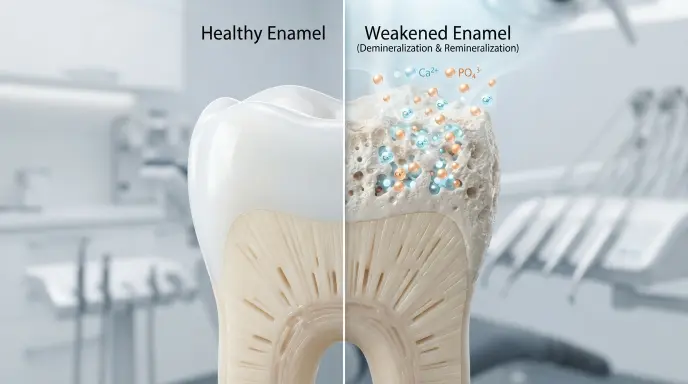
Many cases of weak enamel develop slowly. The problem may begin when acids remove minerals from the tooth surface faster than saliva and daily oral care can replace them. Physical wear can also make enamel thinner over time.
Understanding what is causing the problem is important because strengthening enamel also means reducing the habits or conditions that continue to damage it.
Acidic Foods and Drinks
Soda, sports drinks, citrus fruits, fruit juices, sour candy, and other acidic foods can soften the enamel surface. Having them repeatedly throughout the day gives teeth less time to recover. You do not always need to avoid acidic foods completely. However, limiting how often your teeth are exposed to acid can help reduce enamel erosion.
Frequent Snacking and Sugar Exposure
Bacteria in your mouth can use sugars and some carbohydrates from food and produce acids. These acids may remove minerals from enamel. Frequent snacking means your teeth may face repeated acid attacks. Giving your mouth time between meals allows saliva to help neutralize acids and support the natural mineral balance.
Brushing Too Hard
Using too much pressure while brushing does not make your teeth cleaner. Aggressive brushing may increase wear, especially around areas where enamel is already thin. Use a soft-bristled toothbrush and gentle pressure. Your goal should be to remove plaque without scrubbing the tooth surface roughly.
Acid Reflux and Other Sources of Acid
Acid does not only come from food and drinks. Stomach acid can reach the mouth in people who experience frequent acid reflux or vomiting. Repeated exposure to stomach acid may contribute to dental erosion. If reflux happens often, treating the cause is important for both your general health and your teeth.
Teeth Grinding
Grinding and clenching place extra pressure on the teeth. Over time, this can wear down biting surfaces and may cause small chips or cracks. Grinding is different from acid erosion because it causes physical wear. Still, both problems may reduce the amount of protective enamel covering a tooth.
Dry Mouth
Saliva plays an important role in protecting enamel. It helps wash away food particles, control acids, and carry minerals such as calcium and phosphate. When saliva production is low, teeth lose some of this natural protection. Dry mouth may therefore make it harder for the mouth to maintain the normal balance between mineral loss and remineralization.
How Does Enamel Become Stronger?
Your teeth naturally move through cycles of mineral loss and mineral replacement. Acids can pull minerals out of enamel, which is called demineralization. When conditions improve, minerals from saliva can return to the weakened surface. This is remineralization.
Saliva supplies calcium and phosphate and helps control acidity in the mouth. Fluoride can further support remineralization, while hydroxyapatite is also being studied and used as a mineral-based enamel-supporting ingredient. Consistent daily care gives this process a better chance to protect the enamel that remains.
Can Toothpaste Strengthen Weak Enamel?
Toothpaste can support weak enamel, but it should be viewed as one part of enamel care rather than a way to rebuild a damaged tooth. Certain toothpaste ingredients can support remineralization and help protect the remaining enamel surface.
Fluoride has long been used to limit demineralization and promote remineralization. Hydroxyapatite toothpastes have also been studied for enamel support, with recent reviews reporting promising results. The exact benefit depends on the formula, the condition of the enamel, and how consistently the product is used.
What Ingredients Should You Look For in an Enamel-Supporting Toothpaste?
Enamel-supporting toothpaste formulas can contain different active ingredients. Some focus on fluoride, while others use mineral-based options such as hydroxyapatite. The right choice depends on your oral health needs. If you have major erosion, cavities, or ongoing sensitivity, a dentist can help determine which ingredients may be most appropriate.
Fluoride
Fluoride helps reduce enamel demineralization and supports remineralization. It can become available in saliva and around the tooth surface, where it helps enamel become more resistant to acid. Its role in cavity prevention and enamel remineralization has been widely studied.
Nano-Hydroxyapatite
Hydroxyapatite is a calcium-phosphate mineral closely related to the mineral structure of tooth enamel. Nano-hydroxyapatite uses very small particles designed to interact with the tooth surface.
Research suggests that hydroxyapatite toothpaste may support remineralization and help reduce mineral loss. Recent systematic reviews have found promising results, although the amount and quality of evidence still varies between studies.
Calcium and Phosphate
Calcium and phosphate are important parts of tooth mineral. Saliva naturally carries these minerals and helps make them available around the enamel surface. They are especially important during remineralization because they can return to areas where mineral loss has started.
Gentle, Low-Abrasive Formulas
Cleaning your teeth is important, but a toothpaste does not need to feel extremely rough to work well. Excessive abrasion may be a concern when enamel is already thin or worn. Choose a formula designed for regular brushing and use gentle pressure with a soft toothbrush. If your enamel is badly worn, ask your dentist which type of toothpaste is suitable.
7 Ways to Help Strengthen and Protect Weak Enamel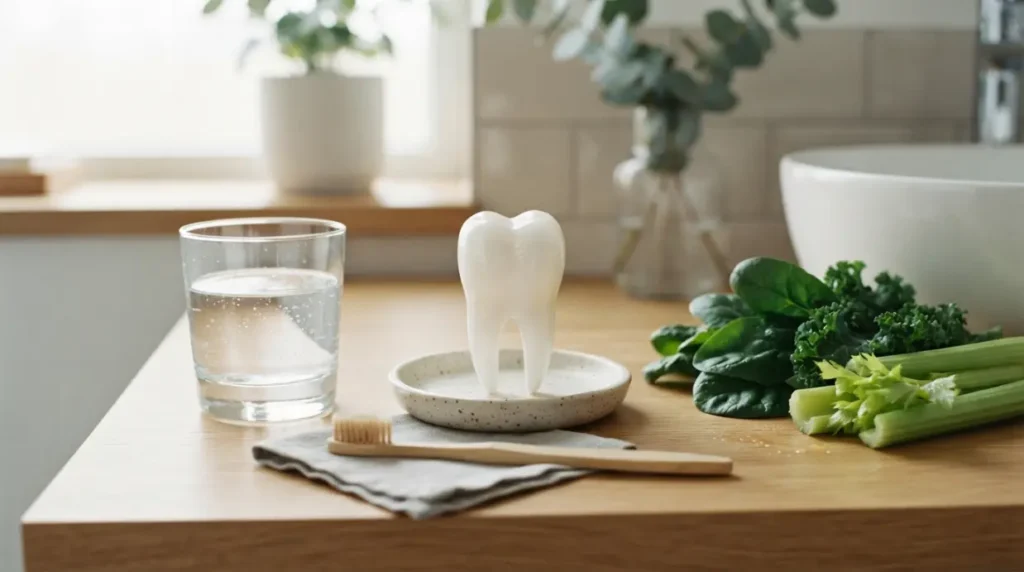
Strengthening weak enamel is not about one product or one habit. Daily choices can reduce further mineral loss while supporting the enamel that is still present.
Use an Enamel-Supporting Toothpaste
Use a toothpaste that contains ingredients designed to support enamel. Depending on your preferences and dental needs, this may include fluoride or hydroxyapatite. Consistency matters more than using large amounts of toothpaste. Follow the product directions and brush as recommended.
Brush Gently With a Soft-Bristled Toothbrush
A soft-bristled toothbrush can remove plaque without placing unnecessary pressure on the tooth surface. Use small, gentle movements instead of aggressive scrubbing. Brushing harder does not usually improve cleaning and may contribute to wear over time.
Limit Frequent Acidic Foods and Drinks
Try to reduce how often your teeth are exposed to acidic drinks and foods. Soda, energy drinks, sports drinks, citrus products, and sour candy can all increase acid exposure. Having acidic foods with meals is generally better than sipping or snacking on them repeatedly throughout the day.
Drink Water After Acidic Foods and Beverages
Drinking plain water after acidic foods or drinks can help rinse your mouth and reduce how long acids stay around your teeth. Water does not replace brushing, but it is a simple way to support your mouth after eating or drinking something acidic.
Give Your Saliva Time to Protect Your Teeth
Avoid brushing immediately after consuming something very acidic. The tooth surface may temporarily be more vulnerable after an acid exposure. The American Dental Association’s MouthHealthy guidance recommends waiting about an hour after acidic foods before brushing so saliva has time to wash away acids and help the enamel surface recover.
Avoid Using Your Teeth as Tools
Do not use your teeth to open packaging, cut thread, remove tags, or crack hard objects. These habits can cause chips and cracks. Remineralization may help early mineral loss, but it cannot put a broken piece of enamel back onto a tooth.
Keep Up With Regular Dental Care
Regular dental visits can help identify enamel changes before they become more serious. A dentist may also notice problems such as grinding, erosion, cavities, dry mouth, or other conditions that could continue weakening your teeth.
What Research Says About Strengthening Weak Enamel
Research supports remineralization as a way to strengthen enamel that has started to lose minerals. A 2025 systematic review and meta-analysis found that hydroxyapatite toothpaste showed promising results for supporting remineralization and helping prevent the progression of early enamel lesions.
Another study comparing nano-hydroxyapatite toothpaste with fluoride toothpaste found that both supported mineral gain in early enamel lesions. This research supports the idea that weakened enamel may become stronger when its structure is still present. However, remineralization cannot replace enamel that has already been physically worn away, chipped, or lost.
Can Weak Enamels Be Reversed?
Early enamel weakening caused by mineral loss may be partly reversed through remineralization. In this stage, minerals can return to the tooth surface because the basic enamel structure is still present. This is why early prevention and daily enamel care matter.
Physical enamel loss is different. If enamel has been completely worn away, chipped, or destroyed, it cannot naturally regenerate because mature enamel cannot biologically rebuild itself. The goal then becomes protecting the remaining tooth and preventing further damage.
Signs Your Tooth Enamel May Be Weak
Changes in enamel can be difficult to notice at first. Some people first become aware of a problem when their teeth start feeling more sensitive or begin to look different.
Possible signs of weak or worn enamel include:
- Increased tooth sensitivity
- Teeth looking more yellow as enamel becomes thinner
- Transparent-looking tooth edges
- Rough or uneven surfaces
- Small chips or cracks
- Increased sensitivity to hot or cold foods
- Sensitivity to sweet or acidic foods
These symptoms do not always mean enamel erosion. Cavities, gum recession, cracked teeth, and other dental problems can cause similar symptoms, so ongoing changes should be checked by a dentist.
When Should You See a Dentist About Weak Enamel?
See a dentist if you have sensitivity that does not improve, visible tooth wear, cracks, chips, pain, or major changes in your tooth surfaces. Professional care is also important if you suspect ongoing erosion or grinding.
Daily enamel care can help protect your teeth, but home products cannot fix every type of damage. A dentist can determine whether the enamel is experiencing early mineral loss or whether the tooth has already suffered physical damage that may need treatment.
Enamel & Co. for Daily Enamel Support
Enamel & Co. offers a dentist-owned, fluoride-free toothpaste formulated with nano-hydroxyapatite. According to the brand, the toothpaste also uses EnamelSync™ Peptide Technology and is made without SLS or parabens. The formula comes in an airless pump designed to protect the toothpaste from air and outside contamination.
Nano-hydroxyapatite fits naturally into an enamel-supporting routine because hydroxyapatite is closely related to the mineral found in tooth enamel. Enamel & Co. positions its toothpaste as a fluoride-free option for people who want mineral-based daily oral care.
Give Your Enamel the Support It Needs
Weak enamel does not always mean the damage is permanent. When mineral loss is still in its early stages, remineralization can help strengthen the enamel that remains. Saliva, healthy daily habits, reduced acid exposure, and appropriate oral-care products can all support this process. The key is to protect enamel early before physical loss becomes more serious.
If you are looking for a fluoride-free option for your daily enamel-care routine, Enamel & Co. Toothpaste is formulated with nano-hydroxyapatite and designed around mineral-based enamel support. You can shop Enamel & Co. online, or contact the Enamel & Co. team if you have questions about the product, its ingredients, or choosing it for your daily routine.
Conclusion
Weak tooth enamel may become stronger when it is still present and has only lost minerals. Remineralization, healthy saliva flow, good oral care, and habits that reduce acid exposure can help support enamel and make it more resistant to everyday wear.
However, enamel that has been physically worn away, chipped, or permanently lost cannot grow back. If you notice tooth sensitivity, discoloration, rough surfaces, or other signs of enamel wear, talk to your dentist to identify the cause and protect the enamel you still have.
Frequently Asked Questions
Can weak tooth enamel become strong again?
Early weakened enamel may become stronger through remineralization. Minerals such as calcium and phosphate can return to areas that have started losing mineral content. It cannot replace enamel that has already been physically lost.
Can damaged enamel repair itself?
Early mineral loss may improve through remineralization, but enamel cannot heal like skin or bone. Once enamel has been chipped, worn away, or badly eroded, your body cannot naturally replace it.
Can toothpaste strengthen weak enamel?
Certain toothpastes can support remineralization and help protect weakened enamel. Fluoride and hydroxyapatite are both used to support enamel health.
Can enamel grow back once it is lost?
No. Mature tooth enamel cannot grow a completely new enamel layer. Early mineral loss may be strengthened, but permanent enamel loss cannot naturally grow back.
Is hydroxyapatite good for weak enamel?
Research suggests hydroxyapatite may support enamel remineralization and help reduce demineralization. It is already used as an active ingredient in some toothpaste formulas.
Does sensitive toothpaste help weak enamel?
It depends on the ingredients. Some sensitive toothpastes also contain ingredients that support enamel or help protect exposed tooth areas. Persistent sensitivity should be evaluated by a dentist.
Can weak enamel cause sensitive teeth?
Yes. When enamel becomes thinner or worn, the more sensitive parts of the tooth underneath may have less protection. This can cause sensitivity to hot, cold, sweet, or acidic foods.