
You should replace your toothbrush every 3 months. If the bristles look bent, flat, or messy before that, change it sooner. A new brush cleans better, and it also stays cleaner. Here is what studies found and how to know when it is time for a new one.
A worn brush leaves more plaque behind, and old bristles can hold germs too. At Enamel & Co., we help people understand daily oral care and enamel health. This guide covers how often to replace manual and electric brushes, signs your brush is done, why some people wear brushes out faster, and how to store and care for your brush.
When Should You Replace a Manual or Electric Toothbrush?
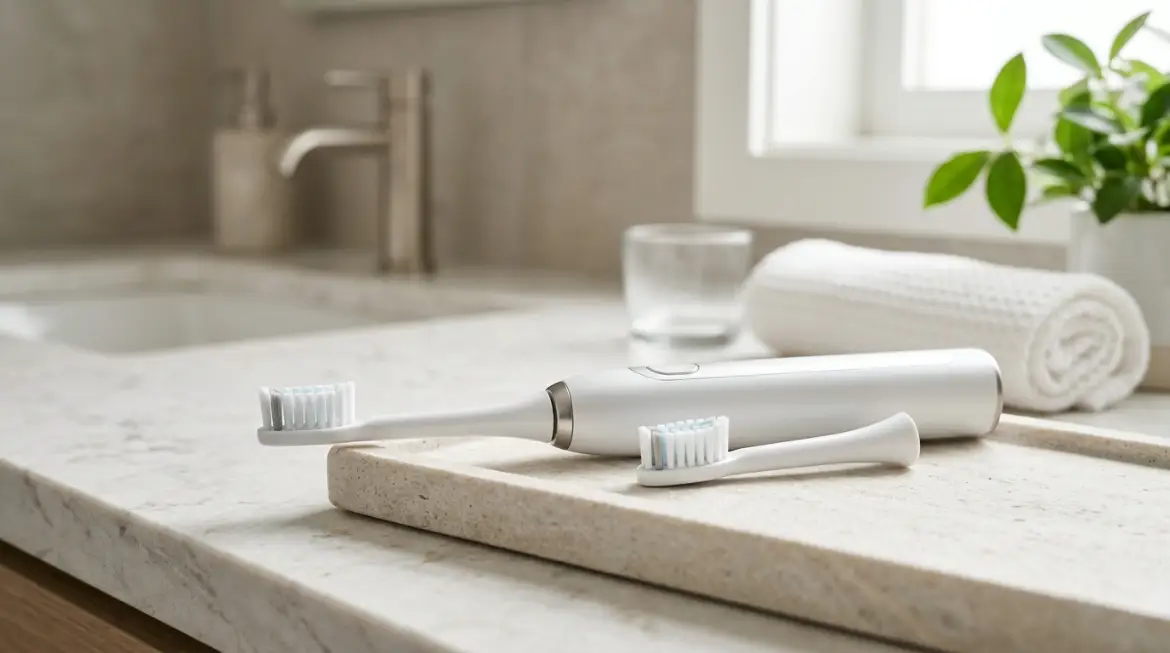
Replace both a manual brush and an electric brush head about every 3 months, or sooner if the bristles look worn. Both types of brushes wear out, but the timing and the signs can look a little different. Below, you will see how long each one lasts and what to watch for. Knowing this helps you swap your brush at the right time.
Manual Toothbrush Timeline
A regular toothbrush should be changed about every 3 months. Most dentists say 3 to 4 months is the limit, but 3 is a safer number if you brush twice a day.
Electric Brush Head Timeline
Electric brush heads follow almost the same rule. Many heads have colored bristles that fade over time, which is the maker’s way of telling you the head is getting old. If your head has no color guide, just count 3 months from the day you put it on.
A 2003 study on three months of real brush use in the Journal of Clinical Dentistry looked at both types. People used either a manual brush or a battery brush twice a day for 3 months. Then they brushed once with their old brush and once with a new one. With the manual brush, the new one cleaned the spaces between the teeth better. With the battery brush, the overall difference was small. But for the 15 people whose heads were the most worn, the new head removed more plaque from the whole mouth. So if your head looks very worn, do not wait for the 3 month mark.
What Really Happens When You Keep Using a Worn Brush?
A worn brush removes less plaque than a new one, and your gums can end up more swollen over time. An old brush still cleans, so many people keep using it. The problem is that it cleans less, and you may not notice the change.
A 2002 clinical study on toothbrush wear in the same journal tested this. The team used a lab machine to wear brushes down until they looked like they had 3 months of use. Then they compared them with brand new brushes. The new brushes removed 13.4% more plaque from the whole mouth and 17% more from the spaces between the teeth. After 6 and 12 weeks, people using new brushes also had less gum swelling and redness. Plaque is the sticky film that wears down enamel and irritates your gums, so this small gap can add up over time.
Five Quick Ways to Tell Your Brush Is Done
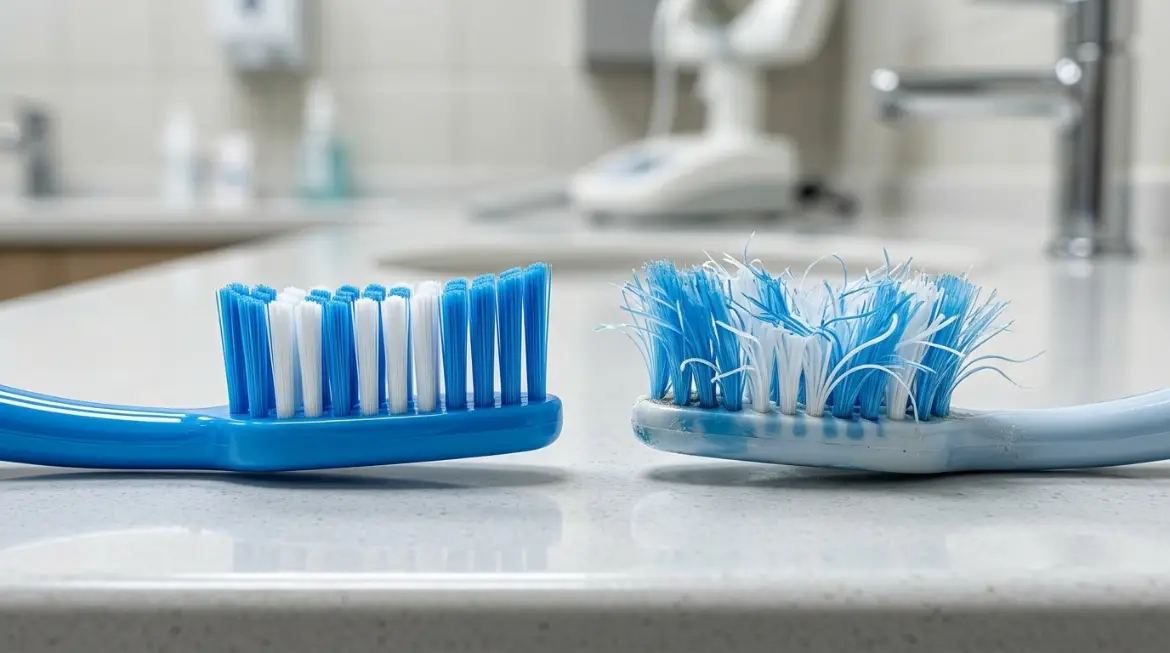
Your brush is done when the bristles spread out, the color fades, or the bristles no longer spring back.
- Look at the bristles. If they spread out like a flower or lean to one side, the brush is finished.
- Check the color. If the bristles look dull or stained, the brush has been used for a long time.
- Press the bristles with your finger. If they do not spring back, they are too soft to clean well.
- Think about the date. If you cannot remember when you last changed it, it has probably been too long.
- Notice how your teeth feel. If your mouth does not feel as clean as it used to after brushing, try a new brush before you blame anything else.
Why Your Brush May Wear Out Faster Than Your Friend’s
Hard brushing, kids who chew, and braces can wear a brush out faster than 3 months.
Heavy Brushing, Kids, and Braces
Not everyone wears out a brush at the same speed. People who press hard when they brush can flatten the bristles in a few weeks. Children often chew on their brushes, so theirs may need changing sooner. If you wear braces or clear aligners, you may brush more often and with more care, which can also wear the bristles down faster.
After Being Sick
Many dentists also suggest changing your brush after you have been sick with a cold or the flu. This is common advice, but the studies in this article did not test it. If you are not sure how fast you wear out brushes, a dental team can look at your brush and your brushing style. You can find a dental office near you for a quick check.
What Is Actually Living on an Old Toothbrush?
Many kinds of germs can live on a toothbrush head, and some brush designs hold far more of them than others. Your mouth has a lot of germs, and some of them end up on your brush. That is normal, but it helps to know how it changes over time.
A 2014 study on power toothbrush heads in the Journal of Dental Hygiene came from the University of Texas Health Science Center at Houston. Donna Warren Morris and her team asked 30 people to brush twice a day for three weeks with one of three power brushes. One brush had a solid head, and two had hollow heads. Then the team counted the germs on each head, including yeast, mold, and bacteria linked to gum problems. The solid-head brush held fewer germs than the hollow-head brushes in 9 of 10 comparisons. This was a small pilot study, so the team said a larger study is needed. It still shows that the type of brush and how you care for it can change how many germs it holds.
Can an Old Toothbrush Make You Sick?
Probably not. Many of the germs on a toothbrush come from your own mouth, and for most healthy people the immune system keeps them in check. Researchers do not fully agree on this, and the studies on it are limited. People with a weak immune system should be more careful, so they may want to swap their brush after any illness and ask a doctor or dentist for advice. Even when the risk is low, changing your brush on time is an easy habit that costs very little.
Storage Habits That Keep Your Brush Cleaner
Wash your brush, let it dry upright, and keep it away from the toilet. How you store your brush matters almost as much as how often you change it. Wash it well with tap water after you brush, and wash off any leftover toothpaste too. Stand it upright in a holder so the bristles can dry in the air. Keep it as far from the toilet as your bathroom allows, and close the lid before you flush.
Do not share your brush with anyone, even family. Also avoid keeping it in a closed cap or box while it is still wet, because damp bristles are a good place for germs to grow. If you travel, let the brush dry a little first, then use a travel case with air holes.
What to Do With Your Old Toothbrush
Retire the old brush, then recycle it or save it for cleaning jobs. Once you swap it out, do not use the old brush in your mouth again. Some people keep old brushes for cleaning small spots like tile grout, jewelry, or the edges of a sink. Just make sure they are clearly separate from the ones you use for your teeth. If your area has a recycling program for toothbrushes, that is a good option too.
Keep Your Daily Oral Care Simple With Enamel & Co.
Enamel & Co. is a dentist-owned oral care brand with toothpaste available through its dental offices across Arizona. We believe a healthy smile comes from simple habits, not a complicated routine.
At Enamel & Co., we offer fluoride-free toothpaste with nano-hydroxyapatite, available at our participating dental offices across Arizona. Our toothpaste is made for people who want to support enamel health as part of a daily brushing routine.
Ready to upgrade your daily oral care routine? Shop Enamel & Co. toothpaste online or ask about availability at one of our Arizona dental offices. Pair it with a fresh brush for a cleaner start to every day.
Conclusion
Your toothbrush works hard twice a day, so it needs a little care in return. A new brush gets more plaque off your teeth, and your gums can stay healthier too. Set a reminder every three months, and take a quick look at the bristles in between.
Small habits make the biggest difference. Let the brush dry between uses and keep it to yourself. Along with regular dental visits, these steps help keep your whole mouth healthy.
Frequently Asked Questions
Does a more expensive toothbrush last longer?
Not really. Price does not tell you how long the bristles will hold their shape. Use the same 3 month rule for any brush, and change it sooner if it looks worn.
Do I need a toothbrush sanitizer?
Most dentists say a good rinse and letting the brush dry is enough. A sanitizer will not fix bristles that are already worn out, so a new brush is still the better choice. If you do use one, follow the label so the bristles are not damaged.
Should I change my child’s toothbrush sooner?
Often, yes. Kids tend to chew and press hard, so check their brush every month. If the bristles look bent or flat, swap it right away.
Should I choose a soft or hard toothbrush?
Soft. Soft bristles clean well without being rough on your gums, and they are the type most dental teams suggest for daily use. If you are unsure which one suits you, ask your dentist at your next visit.
How long should I brush each time?
Aim for two minutes, twice a day. Use small, gentle strokes, and give extra time to the gumline and the back teeth. A timer can help you keep track.