Yes, nano-hydroxyapatite toothpaste works for some jobs, but with limits. It can help early weak spots on your enamel get minerals back, and one small study found it worked about as well as fluoride toothpaste for this. It cannot grow back lost enamel or fix a deep cavity.
Early enamel loss can turn into cavities if it is ignored. At Enamel & Co., we focus on helping people understand daily oral care and enamel health. This guide covers how nano-hydroxyapatite works, what the research shows, who can benefit, and when you still need a dentist.
What Is Nano-Hydroxyapatite?
Nano-hydroxyapatite is a tiny mineral particle that is almost the same as the mineral that makes up your teeth. Hydroxyapatite is made of calcium and phosphate, and about 97% of your enamel is made of it.
The word “nano” just means the particles are extremely small. Because they are so small, they can reach tiny gaps and rough spots on the tooth surface. This is why toothpaste makers use it to support enamel.
How Does Nano-Hydroxyapatite Toothpaste Work?
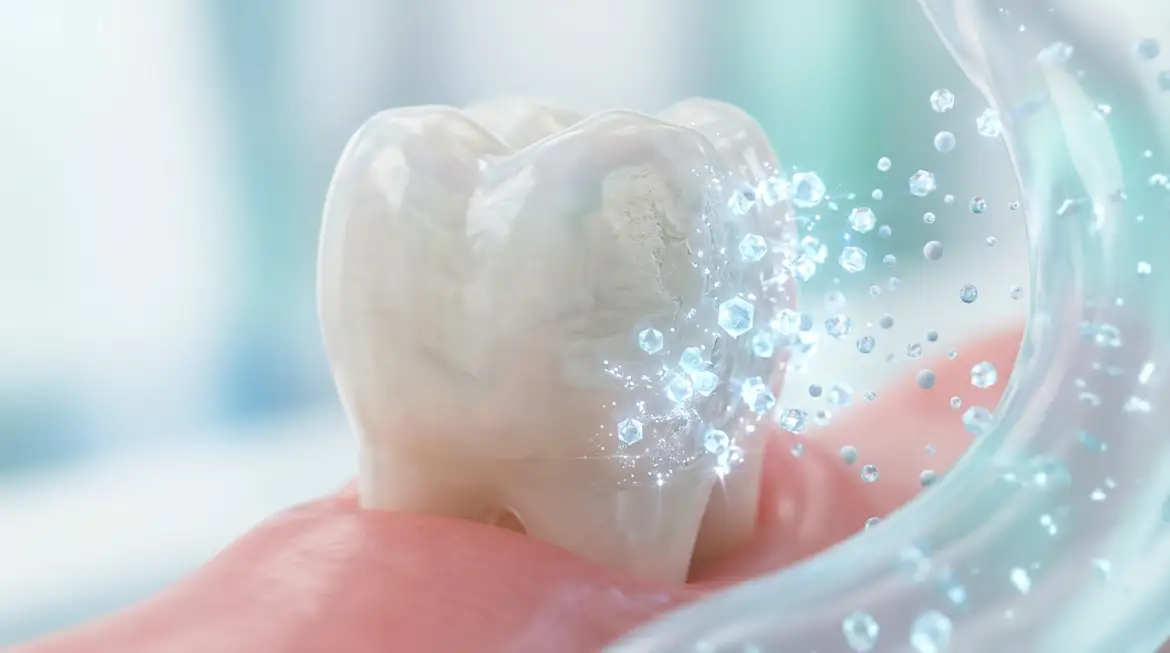
It works by adding minerals back to your teeth and by making the tooth surface smoother. It may also help control the acid and plaque that harm enamel.
Remineralization of Early Enamel Loss
Remineralization means minerals go back into a weak spot on your tooth. Every day, acid from food and bacteria pulls minerals out of enamel. Your saliva puts some of them back, and nano-hydroxyapatite can add extra building material to that process. This is how weak enamel can become stronger over time.
Filling Micro-Fissures and Smoothing the Surface
The tiny particles can settle into very small cracks and rough areas on enamel. This can make the surface feel smoother. A smoother surface gives plaque fewer places to hold on, and it may also help with the quick zing some people feel from sensitive teeth.
Buffering Acid and Reducing Plaque
Hydroxyapatite is made of calcium and phosphate, so it may help balance acid in your mouth. After you eat, your mouth becomes more acidic for a while, and that is when enamel is most at risk. Some people also believe it helps plaque stick less, but this part needs more study, so think of it as a possible extra benefit.
Does Nano-Hydroxyapatite Toothpaste Really Work? What Research Shows
It can help early enamel weak spots regain minerals, and one small study found it worked about as well as fluoride toothpaste for that job.
In 2011, Kamran Najibfard and his team at the University of Texas Health Science Center at San Antonio tested this in a clinical study on nano-hydroxyapatite toothpaste. Thirty adults wore a small mouth device that held tiny pieces of tooth with early weak spots. They used toothpaste with 5% nano-hydroxyapatite, toothpaste with 10% nano-hydroxyapatite, and toothpaste with 1,100 ppm fluoride.
All three toothpastes helped the weak spots gain minerals back, and there was no big difference between them. This is a good sign, but it is only one small study, and each test period lasted 28 days. It shows that nano-hydroxyapatite can support early enamel repair. It does not prove it stops cavities for everyone over many years.
What Does the Latest Research Say About Nano-Hydroxyapatite?
Newer reviews sound more positive than older ones, but they still ask for better and longer studies.
Two reviews that combine many studies show how the picture has changed.
| Review | Studies used | What it found |
| 2022, Clinical Oral Investigations | 5 clinical and 5 in situ studies | Not enough strong proof yet, because of short follow-up and high risk of bias |
| 2024, Journal of Dentistry | 5 clinical and 8 in situ trials | Fluoride-free hydroxyapatite products can help reduce cavities |
The 2024 review is the more hopeful one, but it covers hydroxyapatite in general, not only nano-sized particles. Some of its authors also work for a toothpaste company, so it is wise to read its results with care. The 2022 review pointed out that six of its studies had a high risk of bias, and six were funded or published by the makers of the tested products. Both reviews agree on one thing: small, short, or company-funded studies cannot give the final answer.
Nano-Hydroxyapatite vs. Fluoride: Which Is Better?
Neither one is clearly better for everyone. In the study above, both helped early weak spots regain minerals about equally. Fluoride has been used for many years and has a long record behind it. Nano-hydroxyapatite is newer, but it is a popular choice for people who want to avoid fluoride. If you get cavities often, it is smart to ask your dentist before you switch.
What Can Nano-Hydroxyapatite Toothpaste Not Do?
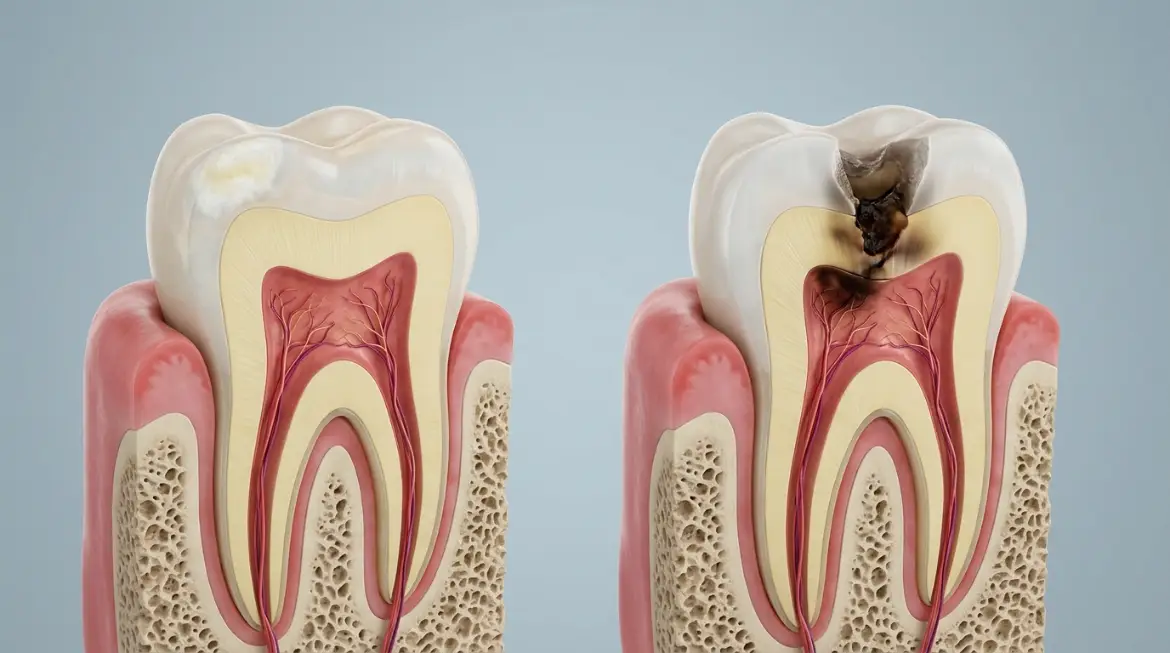
It cannot bring back enamel that is already lost, and it cannot treat a cavity that has gone deep into the tooth. Once a real hole has formed, the tooth needs a dentist to clean it and fill it. Toothpaste only works on the very early stage, before a hole forms. If you see brown or black spots, feel pain when you bite, or have a toothache that does not go away, book a dental visit.
Who Can Benefit from Nano-Hydroxyapatite Toothpaste?
People with sensitive teeth, people who want fluoride-free toothpaste, and families who want a gentle option can all benefit.
Sensitive Teeth
If cold drinks or sweet food make your teeth sting, a smoother and better-supported enamel surface may feel more comfortable. Results are different for each person, so give it a few weeks.
People Who Prefer Fluoride-Free
Some people just do not want fluoride in their daily routine. For them, nano-hydroxyapatite gives a different way to care for enamel, as long as they keep up with regular dental checkups.
Kids and Families
Hydroxyapatite is the same type of mineral found in teeth and bones, so a small amount swallowed by accident is not expected to be a problem. Even so, children should use only a small amount, spit it out, and be watched while they brush.
How to Choose a Nano-Hydroxyapatite Toothpaste
Look for a toothpaste that clearly tells you how much hydroxyapatite it has, and pick one that is gentle on your teeth. Check that the label shows the hydroxyapatite amount, since the study above tested 5% and 10%. Look at the ingredient list too, because some people prefer to avoid harsh foaming agents. Pick a soft, low-abrasive formula so you do not wear down your enamel while brushing, and remember that the right toothpaste can help strengthen enamel only when you use it every day. When you are not sure, ask your dentist.
How to Use Nano-Hydroxyapatite Toothpaste
Brush for two minutes, two times a day, just like you would with any toothpaste. Use a pea-sized amount and a soft toothbrush. After brushing, you can spit out the extra foam but skip rinsing with lots of water, so some of the toothpaste stays on your teeth a little longer. Remineralization does not happen in one day, so it is best to use it every day for several weeks before judging how it works for you.
Enamel & Co. Toothpaste with Nano-Hydroxyapatite
Enamel & Co. toothpaste is made to support your enamel as part of your daily brushing, not to replace your dentist. It uses nano-hydroxyapatite, and it also has our EnamelSync™ blend. The formula is fluoride-free and SLS-free, which many people look for when they want a gentler toothpaste. It comes in an airless pump, which keeps the toothpaste cleaner and helps you get out almost every last bit.
Give Your Enamel the Support It Needs
At Enamel & Co., we offer fluoride-free toothpaste with nano-hydroxyapatite, available through our participating dental stores across Arizona. Our toothpaste is made for people who want to support enamel health as part of their daily brushing routine.
Ready to upgrade your daily oral care routine? Shop Enamel & Co. toothpaste online or ask about availability at one of our Arizona dental stores. Choose a toothpaste that fits your needs and make it part of your daily brushing routine.
Conclusion
Nano-hydroxyapatite toothpaste can help early enamel weak spots regain minerals, and it may be a good choice if you want to skip fluoride or have sensitive teeth. The research we looked at is small, so it is best to see it as a helpful support and not a cure.
Keep brushing twice a day, clean between your teeth, and visit your dentist on a regular schedule. Good daily habits and dental care work together to protect your enamel.
Frequently Asked Questions
Is nano-hydroxyapatite safe if swallowed?
A tiny amount is not expected to cause problems. Hydroxyapatite is the same kind of mineral found in your teeth and bones. Even so, you should spit out your toothpaste after brushing.
Can nano-hydroxyapatite replace fluoride?
It can be an option for some people, but it is not right for everyone. In one small study it worked about as well as fluoride for early weak spots. If you get cavities often, ask your dentist first.
How long before I notice a difference?
Most people need a few weeks of daily use. Remineralization is slow, so one or two brushes will not show a change. Keep brushing twice a day and check how your teeth feel after a month.
Does it whiten teeth?
It is not a strong whitener. It may make your teeth look a little brighter because it can smooth the surface. Do not expect a big color change.
Is it safe for children?
It is generally considered gentle for kids. They should use only a small amount and be watched while brushing. Ask your child’s dentist if you are not sure.
Can it help with tooth sensitivity?
It may help some people, especially by smoothing the tooth surface. Results are different for each person. If the pain stays, see your dentist.
Can it fix a cavity?
No, it cannot fix a cavity. It can support very early weak spots before a hole forms. A real cavity needs treatment from a dentist.