
If your teeth hurt when you bite down, the cause may be a cracked tooth, tooth decay, a damaged or uneven filling, inflammation, an infection, or too much pressure from grinding or clenching. Pain that happens only when you chew can have a different cause from everyday tooth sensitivity, so the timing and type of pain can provide useful clues.
At Enamel-Co, we believe understanding what your symptoms may mean is an important part of caring for your teeth. A tooth that hurts when you bite should not automatically be assumed to have a cavity or need a root canal. Some causes are minor, while others need prompt dental care. In this guide, we’ll explain the common reasons biting can cause tooth pain, what different pain patterns may mean, and when it is time to see a dentist.
What Happens Inside a Tooth When You Bite Down?
When you bite down, chewing pressure travels through the crown of the tooth and into the tissues that support it. The hard outer enamel protects the dentin, which surrounds the pulp inside the tooth. The pulp contains nerves and blood vessels, so irritation or damage deeper inside the tooth can make normal chewing pressure feel painful.
Around the tooth’s root, the periodontal ligament connects the tooth to the surrounding bone and helps absorb the forces created when you chew. If the tooth, pulp, or supporting tissues become irritated or damaged, they may respond painfully to pressure that would normally feel comfortable. This is why pain when biting does not always mean there is a visible problem on the tooth’s surface.
9 Common Reasons Your Tooth Hurts When You Bite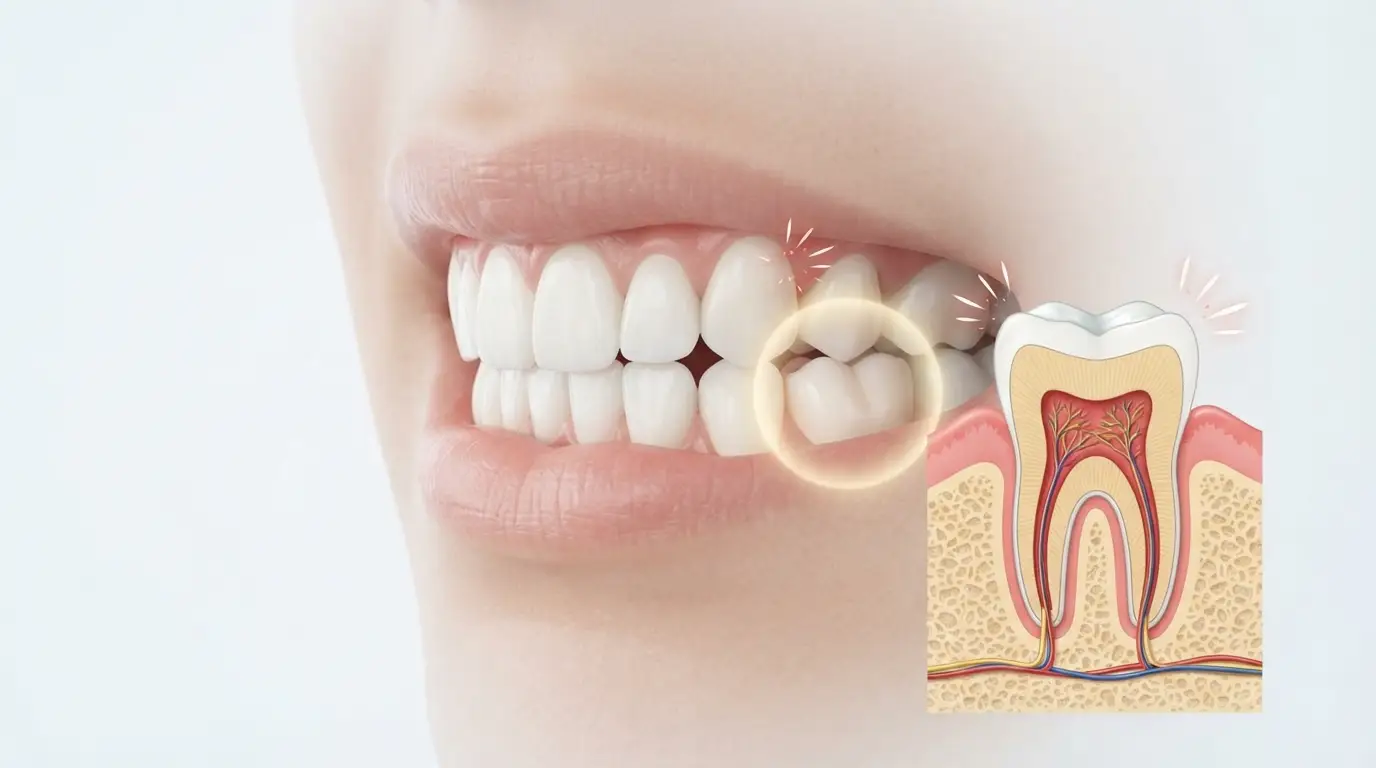
Pain when you bite down can come from the tooth itself, a dental restoration, the tissues around the tooth, or pressure affecting the upper jaw. The symptoms that happen along with the pain can provide clues about what may be causing it.
A cracked or fractured tooth
A crack can make a tooth painful when chewing because biting pressure can cause the cracked parts of the tooth to move slightly. You may notice sharp pain when biting or when releasing your bite, and the pain may come and go rather than staying constant. Some cracks are too small to see in a mirror, which can make this cause difficult to identify without a dental exam.
Tooth decay or a deep cavity
A cavity can cause pain when biting when decay has progressed deeper into the tooth and affected the tissues beneath the enamel and dentin. You may also have sensitivity to hot, cold, or sweet foods, or notice a visible hole or dark area on the tooth. Deep decay is different from ordinary surface sensitivity because pressure from chewing may also trigger pain when the damaged area is more advanced.
A high or uneven filling
A filling that sits slightly higher than the surrounding tooth can take more force when you bite down. This can make the tooth feel sore or painful, especially when chewing or closing your teeth together. The timing is often a useful clue because the discomfort may begin after a recent filling and feel like one tooth is hitting before the others.
A loose or damaged crown
A crown that has become loose, cracked, or damaged can cause pain when you put pressure on the tooth underneath it. You may also notice that the crown feels different when you bite, moves slightly, or no longer feels like it fits correctly. Unlike a problem with an untreated tooth, this type of pain is associated with a tooth that has already been restored.
Inflammation of the tooth pulp
The pulp is the soft tissue inside the tooth that contains nerves and blood vessels. If it becomes inflamed because of deep decay, trauma, cracks, or other damage, the tooth may become painful when pressure is applied. Other symptoms can include lingering sensitivity to hot or cold, spontaneous tooth pain, or discomfort that continues after the trigger is gone.
A dental abscess
A dental abscess is an infection that can develop around the root of a tooth and create pressure in the surrounding tissues. The tooth may become very sensitive to biting or touching, and you may also notice swelling, a bad taste, pus, fever, or a persistent throbbing pain. These symptoms make an abscess different from temporary sensitivity or discomfort caused by a recent dental restoration.
Inflamed gums or supporting tissues
The tissues around a tooth can become irritated or inflamed because of gum disease, trapped food, injury, or other local problems. When these supporting tissues are tender, putting pressure on the tooth during chewing can cause soreness. You may also notice swollen, red, tender, or bleeding gums around the affected area.
Teeth grinding or clenching
Grinding or clenching puts repeated pressure on the teeth and the tissues that support them. Over time, this can leave one or several teeth feeling sore when you chew, especially after waking up or during periods of stress. Other clues can include jaw soreness, headaches, worn tooth surfaces, or tenderness affecting several teeth rather than just one.
Sinus pressure affecting upper teeth
Pressure or inflammation in the sinuses can sometimes cause discomfort in the upper back teeth because their roots are close to the sinus spaces. The discomfort may affect several upper teeth rather than one specific tooth and can become more noticeable when you bend forward. A stuffy nose, facial pressure, or recent sinus symptoms can help distinguish this from a problem limited to one tooth.
What Research Says About Bruxism and the Bite
A 2012 review by F. Lobbezoo, J. Ahlberg, D. Manfredini, and E. Winocur, published in the Journal of Oral Rehabilitation, examined whether bruxism and the way the teeth meet are causally related. After reviewing the available research, the authors found no evidence that bite-related factors cause bruxism. The review was first published on April 10, 2012, and suggested that other factors, including behavioral and psychosocial factors, may play a more important role in the development of bruxism.
What Does Pain When You Bite Versus Release Tell You?
The timing of your tooth pain can provide useful clues about what is happening. Pay attention to whether the pain starts as you put pressure on the tooth, happens when you release your bite, or continues after you stop chewing.
| Pain pattern | What it can indicate |
| Pain as you bite down | Several possible tooth or supporting-tissue problems |
| Sharp pain when releasing the bite | Can occur with a cracked tooth |
| Pain immediately after pressure | May indicate irritation of the tooth or surrounding tissues |
| Pain that continues after chewing | May indicate inflammation requiring evaluation |
These patterns can help a dentist understand your symptoms, but they do not identify the exact problem on their own. Different dental conditions can produce similar pain patterns, so a dental exam may be needed to determine the actual cause.
Why Does Only One Tooth Hurt When I Chew?
When only one tooth clearly hurts when you chew, the problem is more likely to be localized to that tooth or the tissues directly around it. A crack, decay, a problem with a filling or crown, or localized inflammation can make one tooth respond painfully when pressure is applied. In some cases, the tooth may also be taking more force than the teeth around it, making it sore during chewing.
The fact that only one tooth hurts does not identify the exact cause. If the pain keeps returning, gets worse, or makes it difficult to eat, a dentist can check how that tooth responds to pressure and examine the tooth and surrounding tissues. This can help separate a problem affecting one tooth from discomfort caused by pressure across several teeth.
Why Do Several Teeth Hurt When I Bite Down?
When several teeth hurt at the same time, the source may involve pressure or inflammation affecting more than one tooth. Grinding or clenching can put repeated force on multiple teeth and make them sore when you chew. An uneven bite can also place extra pressure on several teeth. Gum or periodontal inflammation may cause tenderness across a wider area rather than around one tooth.
Several painful teeth can also occur with sinus pressure, especially in the upper back teeth, because the roots of these teeth are close to the sinus spaces. Generalized tooth sensitivity may also affect multiple teeth, although sensitivity is often triggered by hot, cold, sweet, or acidic foods rather than chewing alone. When several teeth hurt, the pattern and other symptoms can help a dentist determine whether the issue is related to bite pressure, the gums, the sinuses, or tooth sensitivity.
Can a Tooth Hurt When Biting Even If It Looks Fine?
Yes. A tooth can hurt when you bite even when it looks completely normal in a mirror. Small cracks may be difficult to see, and problems deeper inside the tooth are not always visible from the outside. Damage or decay beneath an existing filling or crown may also be hidden from view.
Some dental problems can only be identified through a dental examination and specific tests. A dentist may check how the tooth responds to pressure, examine the surrounding tissues, test the pulp, and use X-rays or other imaging when needed. So, the absence of a visible crack, hole, or discoloration does not necessarily mean the tooth is healthy.
Why Does My Tooth Hurt After a Filling or Crown?
Some tooth discomfort can occur after a filling or crown, especially when the tooth has recently been treated. The reason can range from temporary sensitivity to a change in how the teeth meet when you bite. Paying attention to when the pain started and whether it is improving can help your dentist assess what is happening.
Temporary sensitivity after treatment
A treated tooth may be sensitive for a short time after a filling or crown. The dental procedure can temporarily irritate the tooth and surrounding tissues, making it uncomfortable when you chew. This type of discomfort should generally improve rather than become more intense over time.
A restoration that changes the bite
If a filling or crown sits slightly higher than the surrounding teeth, that tooth may receive extra pressure every time you close your mouth. This can make it sore when biting or chewing. A dentist can check your bite and adjust the restoration if needed.
Irritation of the tooth’s pulp
Dental treatment can sometimes irritate the pulp inside a tooth, particularly when the tooth already had significant decay or required extensive treatment. Along with pain when biting, you may notice sensitivity to hot or cold or pain that continues after the trigger is gone.
A loose, damaged, or leaking restoration
A filling or crown that becomes loose, damaged, or does not seal properly can allow the tooth underneath to become irritated. Biting pain may occur along with sensitivity, discomfort around the restoration, or a noticeable change in how it feels when you chew.
If biting pain persists, gets worse, or does not seem to be improving after dental work, have the tooth evaluated. Avoid repeatedly biting down to test whether it still hurts, since this can continue putting pressure on an already irritated tooth.
Can Enamel Problems Cause Pain When I Bite?
Worn or weakened enamel can contribute to tooth sensitivity because enamel normally protects the dentin underneath. When dentin becomes exposed, the tooth may respond more strongly to certain triggers, such as hot, cold, sweet, or acidic foods and drinks. However, pain specifically caused by biting pressure is not automatically a sign of weak or eroded enamel.
If your tooth hurts mainly when you bite or chew, other problems should also be considered, especially when the pain is focused on one tooth or keeps coming back. Enamel erosion is more closely associated with sensitivity to external stimuli, while biting pain can have several different causes.
Does Tooth Pain When Biting Mean You Need a Root Canal?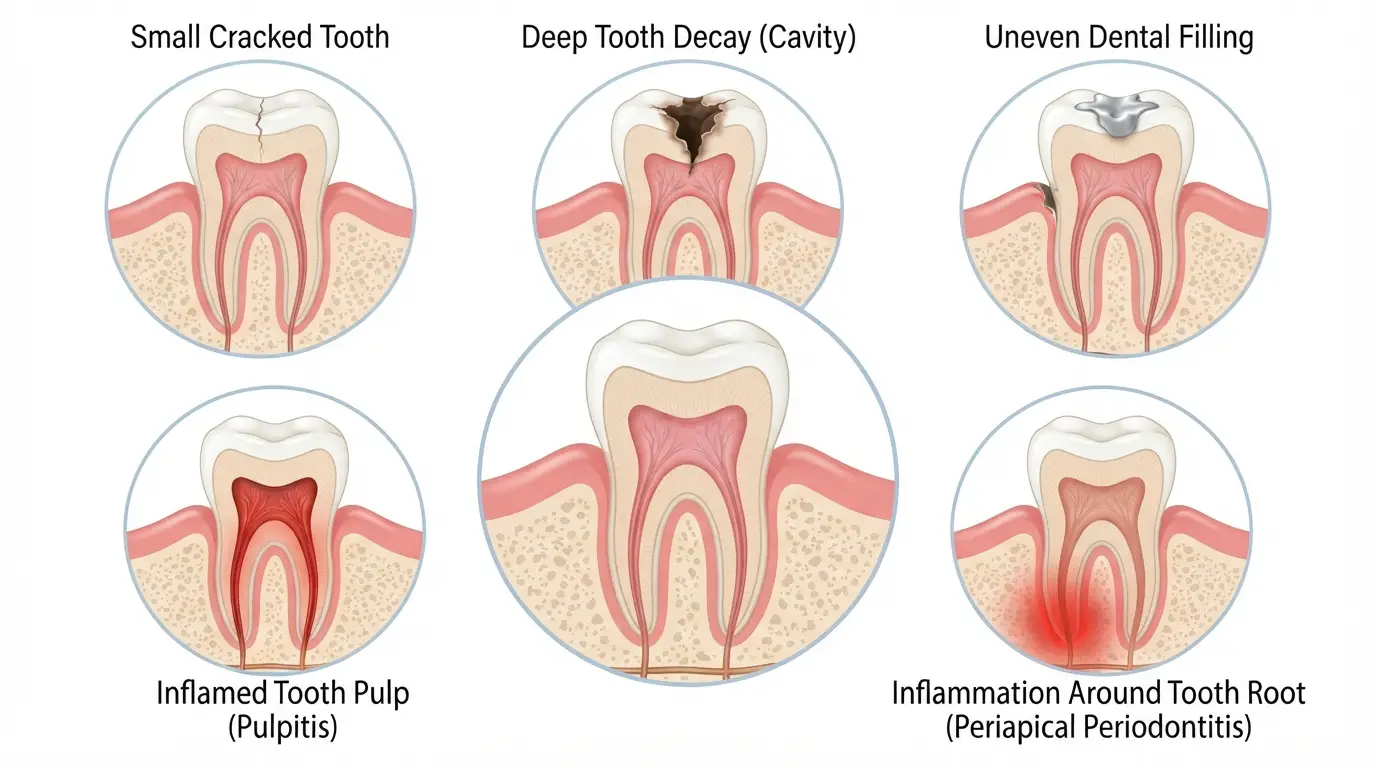
No. Tooth pain when biting does not automatically mean you need a root canal. The cause may be something that can be treated more simply, such as a filling that needs a bite adjustment or a problem with an existing restoration. Other causes may involve inflammation or damage to the pulp inside the tooth.
Whether root canal treatment is needed depends on the condition of the pulp and the tissues around the tooth. A dentist may use your symptoms, an examination, pressure testing, pulp testing, and dental X-rays or other imaging to determine what is happening. The type of pain alone is not enough to decide whether a root canal is necessary.
How Does a Dentist Diagnose Pain When You Bite?
A dentist usually looks at more than the tooth itself when investigating pain that happens during biting. The appointment may involve questions about your symptoms, a physical examination, pressure testing, and tests that help assess the inside of the tooth. X-rays or other imaging may also be used when the problem is not clear from the examination alone.
Questions about when and how the pain occurs
Your dentist may ask when the pain started, whether it happens when you bite down or release your bite, and whether it occurs with certain foods or at certain times. They may also ask whether the pain is limited to one tooth, how long it lasts, and whether you recently had dental treatment.
Checking the tooth and surrounding gums
The dentist can examine the tooth for visible damage, changes in the restoration, decay, or other signs of irritation. They may also check the gums and tissues around the tooth for swelling, tenderness, or other changes.
Testing how the tooth responds to pressure
Your dentist may apply controlled pressure to the tooth or ask you to bite on a specific area. This can help identify whether a particular tooth responds differently from the surrounding teeth. The goal is to reproduce or locate the pain in a controlled way rather than relying only on what can be seen.
Checking the pulp and nerve
Tests may be used to see how the pulp inside the tooth responds to temperature or other stimuli. These results can help the dentist assess the condition of the tissue inside the tooth and determine whether further treatment may be needed.
Using X-rays or other imaging when needed
Dental X-rays can help the dentist look for changes that cannot be seen during a visual examination, including problems around the tooth’s root or bone. Depending on the symptoms and examination findings, other imaging may sometimes be considered. The tests used will depend on what your dentist finds during the appointment.
What Should You Do Until You Can See a Dentist?
Until you can see a dentist, avoid chewing on the painful side and choose softer foods that put less pressure on the tooth. Continue brushing and flossing gently as usual, but avoid repeatedly biting down on the tooth to test whether it still hurts. Doing this can continue to put pressure on an already irritated area.
Pay attention to what triggers the pain, such as biting, releasing your bite, or eating certain foods. This information can help your dentist understand your symptoms. If the pain persists, returns after improving, or becomes worse, arrange a dental evaluation rather than relying on temporary relief alone.
Can Tooth Pain When Biting Go Away Without Treatment?
Sometimes, tooth pain when biting can improve on its own, especially when it comes from temporary irritation or discomfort after recent dental work. However, feeling better does not always mean the underlying problem has healed. Some dental problems can cause symptoms that come and go before becoming painful again.
A crack or dental infection, for example, should not be assumed to have resolved simply because the pain has stopped for a while. If pain returns, continues, or gradually becomes worse, arrange a dental evaluation to find out what is causing it. Recurring pain is a reason to have the tooth checked rather than repeatedly waiting for the symptoms to disappear.
Take Care of Your Teeth With Enamel & Co
Healthy enamel helps protect the sensitive layers inside your teeth, but persistent pain when biting should always be evaluated by a dentist. Enamel & Co offers dentist-owned, fluoride-free oral care designed to support everyday enamel care. Shop Enamel-Co Toothpaste and make enamel care part of your daily oral care routine.
Conclusion
Pain when you bite down can have several possible causes, from a recent filling or bite issue to a cracked tooth, decay, inflammation, or pressure from grinding. The pattern of the pain can provide useful clues, but it cannot confirm the cause on its own. A tooth can also hurt even when it looks normal from the outside.
If biting pain keeps returning, becomes worse, or affects how you eat, it is worth having the tooth checked by a dentist. Getting the cause identified early can help determine the right treatment and prevent a temporary problem from becoming more serious.
Frequently Asked Questions
Why does my tooth hurt when I bite but not when I drink something cold?
Biting pain can come from problems that respond to pressure rather than temperature. A crack, bite-related issue, or irritation of the tissues around the tooth may cause pain when chewing without causing sensitivity to cold drinks. A dental exam can help identify the source.
Can a cracked tooth hurt only sometimes?
Yes. A cracked tooth may not hurt with every bite. The pain can depend on how pressure is applied to the tooth, and some people notice sharp or brief pain only with certain foods or movements. Pain that comes and goes does not rule out a crack.
Can a cavity cause pain when biting?
Yes, especially when decay has progressed deeper into the tooth. A deeper cavity may cause pain when chewing along with sensitivity to hot, cold, or sweet foods. A dentist can determine how extensive the decay is and whether the tooth needs treatment.
Can grinding make my teeth hurt when I chew?
Yes. Grinding or clenching can place repeated pressure on the teeth and the tissues that support them, which may make them sore when chewing. Jaw soreness, morning tooth tenderness, headaches, or several sensitive teeth can also occur with frequent grinding or clenching.
When should I see a dentist for pain when biting?
You should arrange a dental appointment if the pain keeps returning, persists, gets worse, or makes it difficult to eat. It is also worth having the tooth checked if you suspect a crack or if the pain started after a filling or crown. Severe pain, swelling, fever, or drainage should be evaluated promptly.