
Yes, fluoride treatment is generally considered safe for children’s teeth when it is applied in the recommended amount by a dental professional. Fluoride helps strengthen tooth enamel and can make children’s teeth more resistant to the acids that cause cavities. The right amount and type of fluoride treatment may vary based on a child’s age, dental health, and risk of tooth decay.
At Enamel & Co. we believe parents should understand how fluoride treatment works before deciding whether it is right for their child. Knowing the benefits, recommended use, and potential concerns can help parents make an informed decision about protecting their child’s teeth and preventing cavities.
Why Do Dentists Recommend Fluoride Treatment for Children?
Dentists recommend fluoride treatment mainly to strengthen tooth enamel and help lower the risk of cavities, especially in children who are more likely to develop tooth decay.
Bacteria in dental plaque produce acids after a child eats certain foods and drinks. These acids can remove minerals from enamel. Fluoride helps reduce this mineral loss and supports the return of minerals to weakened enamel before a cavity develops.
This preventive effect has also been examined in children. A Cochrane review by Valeria Marinho, Helen Worthington, Tanya Walsh, and Jan Clarkson evaluated 22 trials involving 12,455 children and found that fluoride varnish reduced decay in both baby and permanent teeth. Fluoride treatment is still only one part of cavity prevention. Children also need regular brushing, appropriate cleaning between teeth, balanced eating habits, and routine dental care.
Is Professional Fluoride Treatment Safe for Children?
Yes. Fluoride varnish is generally considered safe for children when a suitable amount is applied correctly by a trained professional.
Why Does the Amount of Fluoride Matter?
The amount matters because problems with fluoride are more closely linked to excessive exposure than to properly controlled use. A fluoride varnish treatment uses a small amount that is painted directly onto the teeth. The varnish starts to set when it contacts saliva, which helps keep it on the tooth surface rather than moving freely around the mouth. This controlled application is different from a child repeatedly swallowing toothpaste, supplements, rinses, or other fluoride products.
What Are the Possible Risks of Fluoride Treatment?
The main concerns are excessive fluoride exposure, swallowing larger amounts, and uncommon reactions to ingredients in a fluoride product. These risks depend heavily on how much fluoride is used and how the child is exposed to it.
Can Fluoride Cause Dental Fluorosis?
Yes. Dental fluorosis can develop when a child swallows too much fluoride over a long period while their permanent teeth are forming, which happens in early childhood. Mild fluorosis appears as faint white lines or flecks on the enamel. More severe cases can cause yellow-brown staining or pitting. Mild fluorosis is mostly cosmetic and doesn’t affect how the teeth work. It can’t develop once the permanent teeth have fully formed.
The risk comes from fluoride added up over time, not from any single exposure. Daily toothpaste that a young child swallows is the more likely cause. Varnish is applied in small amounts a few times a year, so it is less likely to be the main source. It still counts toward a child’s total intake, so parents and dentists should look at all fluoride sources together, including toothpaste, varnish, and any fluoridated water. Fluorosis is preventable with a rice-grain smear of toothpaste under age 3, a pea-sized amount for ages 3 to 6, and supervised brushing.
What Happens If a Child Swallows Fluoride?
It depends on how much and how often. A small amount swallowed now and then, such as a little toothpaste or a bit of varnish during a dental visit, is generally not harmful. Varnish sets in a thin layer on the teeth, so very little is swallowed, which is why it’s commonly used for young children who can’t spit reliably.
A large amount at once, such as a good amount of toothpaste or any fluoride gel or rinse, can cause nausea, vomiting, stomach pain, or drooling. Serious poisoning is rare, but if you think your child swallowed a lot, contact poison control, a doctor, or emergency services right away, even if they seem fine, since symptoms can take time to appear.
Regularly swallowing fluoride toothpaste while permanent teeth are forming can cause mild dental fluorosis: faint white streaks or spots that are usually cosmetic only.
To reduce the risk:
- Use a rice-grain smear of toothpaste under age 3 and a pea-sized amount for ages 3 to 6.
- Supervise brushing and encourage spitting.
- Keep toothpaste, gels, and rinses out of reach.
- Ask your dentist which product they recommend. Gels and rinses are more likely to be swallowed, so they’re generally not advised for very young children.
Can Children Have a Reaction to Fluoride Varnish?
Reactions are possible, but serious reactions to professionally applied fluoride varnish are uncommon. Sometimes a reaction may involve another ingredient in the varnish rather than fluoride itself. Parents should tell the dentist about known allergies or previous reactions to dental materials before treatment. Seek urgent medical help if a child develops trouble breathing, major facial swelling, or signs of a severe allergic reaction.
How Does Fluoride Varnish Work on a Child’s Teeth?
Fluoride varnish works by keeping fluoride in contact with enamel, where it can help reduce mineral loss and support remineralization.
When plaque bacteria produce acids, minerals such as calcium and phosphate can leave the enamel. Saliva helps replace some of these minerals once the acid level drops, and fluoride supports this natural repair process. In explaining how this happens, Domen Kanduti, Petra Sterbenk, and Barbara Artnik from the University of Ljubljana note that fluoride can reduce mineral loss while helping minerals return to the tooth surface.
This is why fluoride varnish is placed directly on the teeth. Its main benefit comes from contact with the enamel, so it does not need to be swallowed to help protect the tooth surface.
What Happens During a Child’s Fluoride Treatment?
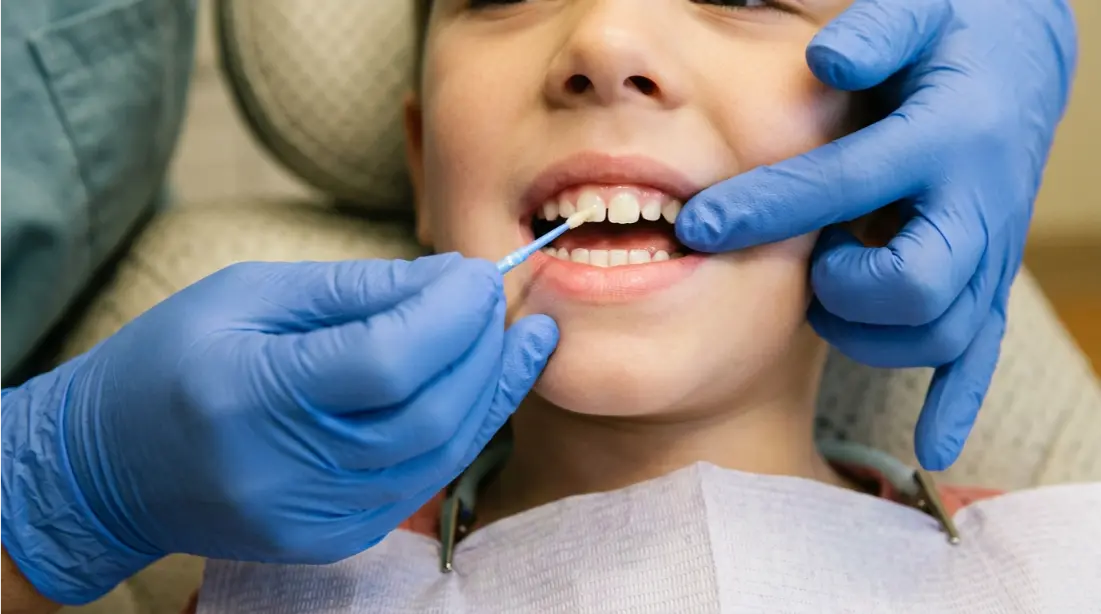
A fluoride varnish treatment is usually quick. A small amount of varnish is brushed directly onto the teeth and allowed to set.
The process commonly includes:
- Checking the teeth. The dentist or another qualified professional looks at the child’s current oral health and cavity risk.
- Preparing the teeth. Excess moisture or debris may be removed.
- Applying the varnish. A thin layer is painted over the tooth surfaces.
- Allowing it to set. Saliva helps the varnish stick to the teeth.
- Giving aftercare instructions. Parents are told when the child can eat, drink, and brush normally again.
Because the treatment is painted directly onto the teeth and takes only a short time, it can also be practical for younger children. The American Academy of Pediatrics describes fluoride varnish in this same way as a topical treatment applied directly to children’s teeth by a health professional.
When Is Fluoride Treatment Recommended for Children?
Fluoride treatment is usually recommended when a child has a higher risk of developing cavities rather than simply because they have reached a certain age.
A dentist may consider factors such as:
- Previous or current cavities
- Early enamel weakening
- Difficulty brushing effectively
- Frequent sugary foods or drinks
- Orthodontic appliances
- Reduced saliva flow
- Certain developmental or health needs
- Limited fluoride exposure
- Other cavity risk factors
This risk-based approach is also supported by research in younger children. Sophie Jullien of the Barcelona Institute for Global Health found that professionally applied fluoride varnish can reduce dental caries in children younger than five, particularly when cavity risk is higher.
The review did not identify one perfect treatment frequency for every child. For that reason, how often fluoride is recommended should depend on the child’s individual oral health and risk rather than a fixed schedule.
Does Every Child Need Professional Fluoride Treatment?

Not always. It depends on the child’s age and cavity risk. Extra professional fluoride is most clearly justified for children who already have cavities, show early enamel changes, have trouble keeping up with oral hygiene, or have several other risk factors. To judge this, a dentist weighs:
- Cavity history and the current condition of the teeth
- Brushing habits and diet
- Age
- Fluoride from toothpaste, drinking water, and supplements
Together, these show how likely a child is to get cavities and how much fluoride they already get. Guidelines don’t all handle this the same way for young children. In the US, the Preventive Services Task Force advises applying fluoride varnish to every child under 5, starting when the first tooth comes in. Other guidelines differ on how often varnish should be applied and whether risk should decide.
The task force’s evidence is strongest for children at higher risk, and the benefit for lower-risk children still needs to be confirmed, so a dentist’s assessment still matters. Its review also found no rise in fluorosis or other side effects from varnish, so the goal is to match treatment to the child, not to avoid it.
Professional Fluoride vs. Toothpaste and Fluoridated Water
Professional fluoride, fluoride toothpaste, and fluoridated water all provide fluoride, but they are used differently.
| Fluoride Source | How It Is Used | Main Purpose | Typical Exposure |
| Fluoride toothpaste | Brushed onto teeth at home | Daily enamel protection | Small amount used regularly |
| Fluoridated water | Consumed as drinking water | Ongoing fluoride exposure | Low concentration over time |
| Professional fluoride varnish | Painted directly onto teeth | Extra topical protection | Concentrated, controlled application |
Professional varnish places fluoride directly on the tooth surface during a controlled treatment. Toothpaste is used more frequently in much smaller amounts.
Drinking water provides a different type of exposure because fluoride may be consumed throughout the day.
Parents should tell their child’s dentist about the main fluoride sources the child already receives before additional treatment is recommended.
How Can Parents Reduce the Risk of Too Much Fluoride?
The main concern is dental fluorosis, which can develop when young children regularly swallow too much fluoride while their permanent teeth form. The most common source is swallowed toothpaste, so a few simple habits keep the risk low without changing the daily brushing routine.
Use a rice-grain smear of fluoride toothpaste under age 3 and a pea-sized amount from ages 3 to 6, supervise brushing so the child spits, and know the fluoride level of your water.
- Spitting: children under 6 swallow about half of what they use, and a national survey found some use more than recommended.
- Storage: keep every product out of reach between uses.
- Extra products: skip rinses, gels, and other professional-strength items at home unless a dentist recommends them. Rinses are generally not advised for children 6 or younger.
- Water: the CDC says a lab test is the only way to measure well water. Bottled water varies, and purified or distilled types contain little to none.
- Dentist visits: share the toothpaste used, the water source, and any supplements or prescriptions, and ask why anything extra is suggested.
What Should Parents Expect After Fluoride Treatment?
Most children can return to normal activities right away. For the rest of the day, expect a short-term change in how the teeth look and a few limits on eating and brushing. Serious reactions are uncommon, and the steps below cover what to do for each situation.
Temporary Changes in How Teeth Look and Feel
Teeth may look slightly yellow or feel coated until the varnish is brushed off, which is normal. The American Academy of Pediatrics says the color returns once it comes off, so there is nothing to treat.
Eating, Drinking, and Brushing After Treatment
Children can eat and drink right away but should skip brushing and flossing for at least 4 to 6 hours. Stick to soft foods and cold or warm drinks, not hot ones. Some providers say to wait until the next morning to brush, which keeps the varnish on longer. Also avoid other high-strength fluoride products, such as gels, that day. Instructions vary by brand, so follow the ones your provider gives you.
When Should Parents Contact a Provider?
Call emergency services for trouble breathing or swelling of the face, lips, or mouth, and contact the provider for repeated vomiting or significant mouth irritation. These reactions are rare. Product labels report swelling in people prone to allergies and breathing difficulty in some children with asthma, and they list rosin (colophony) allergy as a reason not to use the varnish. Tell the provider about asthma or allergies before treatment. A yellow film or rough feel on the teeth is expected and isn’t a reaction.
Conclusion
So, is professional fluoride treatment safe for children’s teeth? For most children, yes. Fluoride varnish is considered safe when an appropriate product and amount are applied correctly. Safety depends on how the fluoride is delivered. Varnish is highly concentrated but applied in a small amount at a visit. Toothpaste and fluoridated water are much lower in concentration but reach the teeth every day, and gels, rinses, and supplements add to the total.
Parents should tell their child’s dentist about the fluoride already used at home and ask why more is being recommended. This keeps cavity prevention in balance with avoiding unnecessary exposure.
Explore Everyday Enamel Care With Enamel & Co.
Professional fluoride treatment and daily toothpaste serve different purposes. A child’s dentist can help determine whether professional fluoride is appropriate based on cavity risk and overall fluoride exposure.
Enamel & Co. offers fluoride-free toothpaste made with nano-hydroxyapatite for families looking for another option for daily enamel care. Explore Enamel & Co. products to learn about the ingredients and choose an option that fits your family’s everyday routine.
Frequently Asked Questions
What Is Fluoride Varnish Made Of?
Most varnishes are 5% sodium fluoride in a sticky resin base, which helps them cling to wet teeth. Many use a natural resin called rosin, also known as colophony, and they come in flavors that children tend to like.
Does Fluoride Varnish Hurt?
No. The varnish is painted on with a small brush, so a child feels little more than the brush, and most children like the taste. Some young children still cry before or during the application.
How Long Does a Fluoride Varnish Treatment Take?
A few minutes. The teeth are dried with gauze and the varnish is painted on. It can be done as part of a routine dental or pediatric checkup.
Can a Pediatrician Apply Fluoride Varnish?
Yes. Pediatricians and other medical providers are trained to apply it, which helps children who don’t yet see a dentist. It’s fine for a child to receive it at both a medical and a dental office. Tell each provider when the last application was so the timing stays sensible.
Does Fluoride Varnish Replace Brushing?
No. Varnish adds protection, but the American Academy of Pediatrics notes it cannot completely prevent cavities. Daily brushing with fluoride toothpaste still matters, along with limiting sugary snacks and drinks between meals.